

If your lights keep flickering, it is worth paying attention rather than waiting for it to settle down. Sometimes the cause is nothing more than a loose bulb. Sometimes it is the first visible sign of a connection quietly heating up inside a wall, and the flicker is the only warning you get. Here is how to tell which one you are dealing with.
One bulb, or the whole house?
The first question to answer is how much is flickering. A single bulb is usually a simple fix — a lamp not seated properly in its holder, a worn fitting, or an LED paired with a dimmer that suits old incandescent bulbs rather than modern drivers. Reseating or replacing the bulb normally settles it, and that is the one job on this page worth trying yourself.
If several lights dip together, or the whole house dims at once, the bulb is not the problem. The circuit is, and that is where it stops being a DIY job.
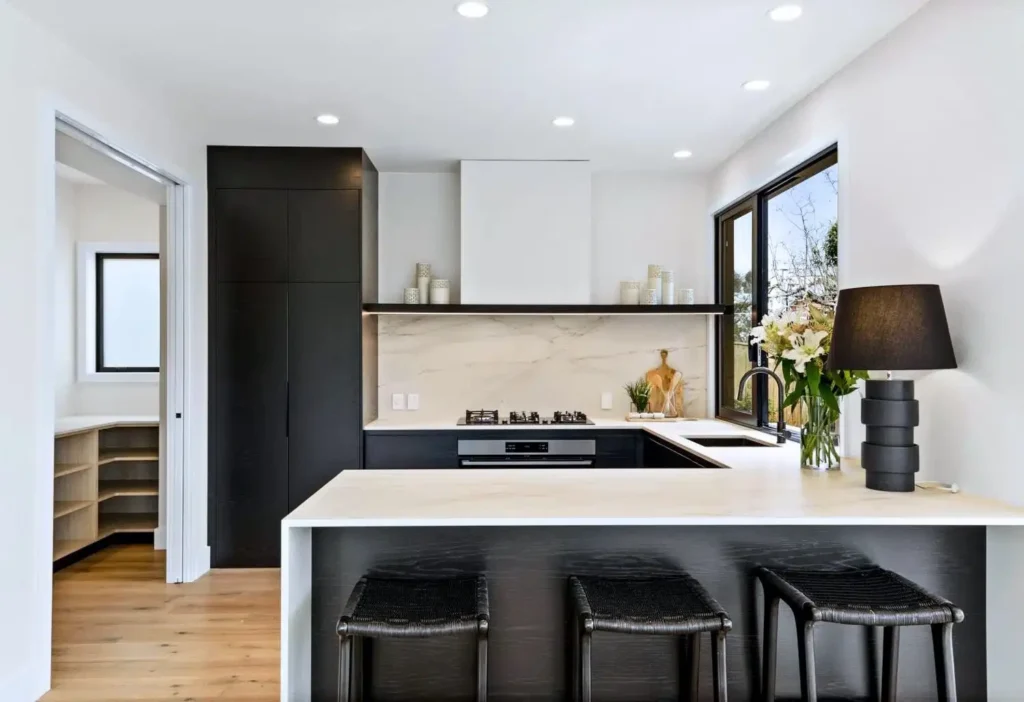
When several lights flicker at once
If several lights dip together, especially the moment the oven, heat pump or washing machine kicks in, the flicker is telling you something about the circuit rather than the bulb. A large appliance starting up draws a surge of current and causes a brief voltage drop. On a healthy circuit you would never notice it. On a circuit with a loose connection, or one carrying more than it was built for, you will see it every time — and that is usually why lights keep flickering on a schedule you can predict.
When the lights keep flickering right across the house
When every light in the house dips at the same time, the cause usually sits upstream of the individual circuits — the main connection, the switchboard, or the incoming supply. This is the version to act on quickly, particularly if you also notice warm switch plates, a burning smell, or a buzzing sound at the board.


Loose connections: the usual reason lights keep flickering
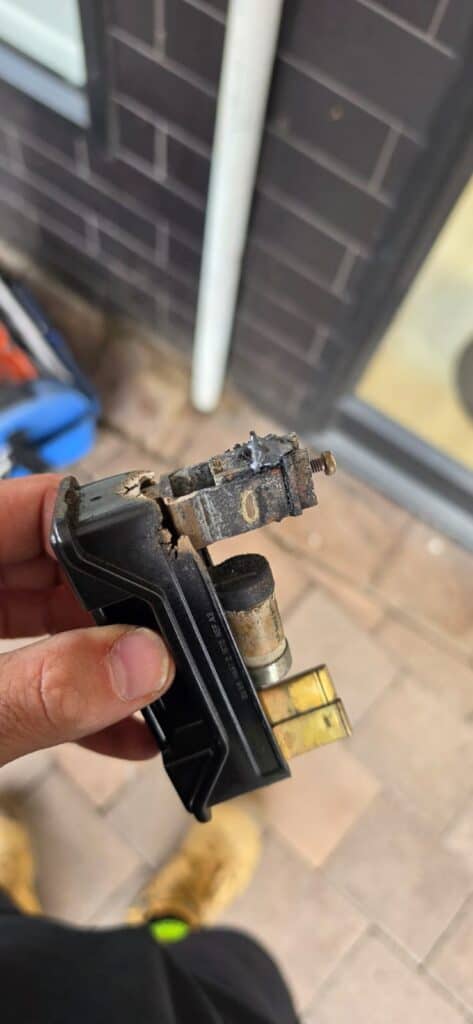
Loose connections are the most common real fault we find, and the reason a flicker deserves your attention. Every time current crosses a loose joint it generates heat. Repeat that thousands of times a day and the connection slowly cooks the terminal, the cable insulation, and whatever happens to be packed in around it.
They turn up at switches, sockets, junction boxes and at the switchboard itself, and none of them announce themselves any other way. The flicker is the symptom, and often the only one you get before something scorches.
What we check when your lights keep flickering
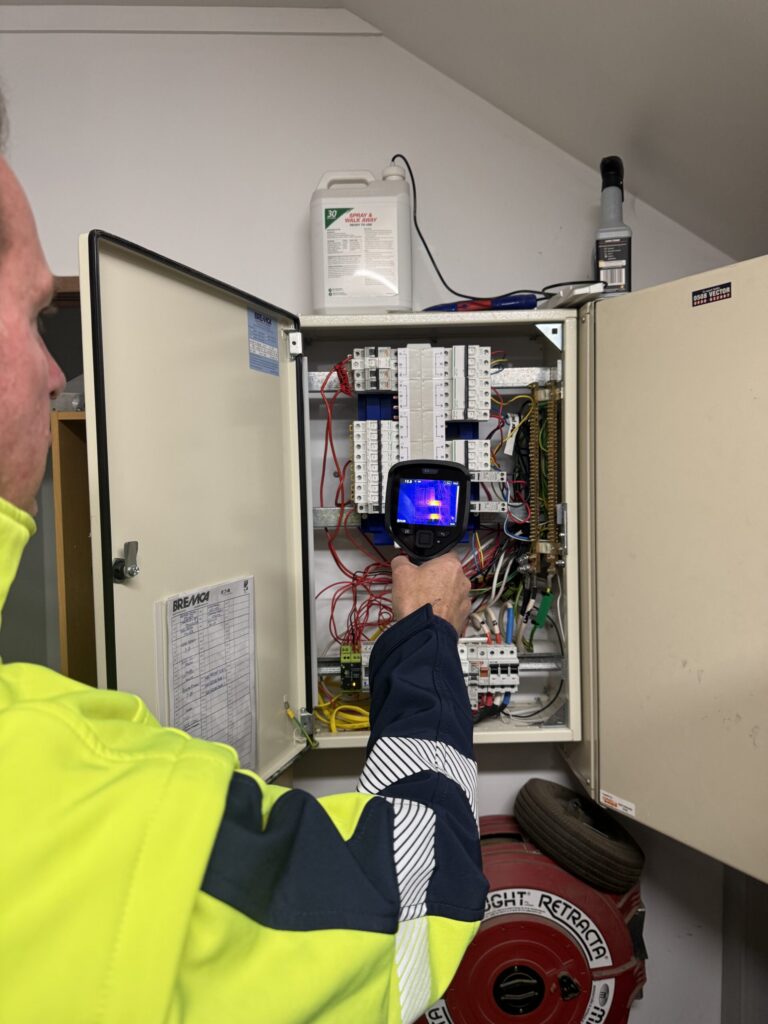
Diagnosing a flicker runs from the cheap end upwards. We start at the fitting and the bulb, then test the circuit under load to see whether the voltage drops when an appliance starts. From there it is a matter of working back through the switches, outlets and junctions on that circuit, looking for a joint that is loose, corroded or heat-damaged. A thermal check at the board often finds a warm terminal before anything else shows it. We resolve most of these in a single visit.
Why lights keep flickering: the five usual causes
- A loose lamp or fitting. The bulb is not making firm contact. Cheap, quick, and the only one worth trying yourself.
- An LED on the wrong dimmer. Dimmers built for incandescent bulbs often cannot control an LED smoothly.
- A loose connection in the circuit. At a switch, a socket, a junction box, or the switchboard itself.
- An overloaded circuit. Too much running off one run, so the voltage sags whenever something large starts up.
- A supply or main connection problem. Less common, and almost always whole-house rather than one room.
When an old switchboard is the culprit
Boards with rewirable ceramic fuses are usually decades old, and age shows up as loose busbar connections, tired terminals and circuits carrying loads nobody imagined when the sparkie first wired the place. If your board still has fuse wire, the two are often related. A switchboard upgrade swaps the fuses for breakers and adds RCD protection where the circuits need it.
If you rent or manage the property
Flickering in a rental is worth reporting in writing rather than living with, because the underlying fault is a safety issue rather than a comfort one. Landlords and property managers carry obligations around electrical safety under the Healthy Homes standards, and a documented flicker is the kind of thing an electrician should trace rather than patch.
Get flickering lights sorted in South Auckland
Some signs mean stop now rather than book later: a burning or hot-plastic smell near a switch or the board, switch plates that feel warm, buzzing or crackling from a fitting, scorch marks around a socket, or flickering that arrived suddenly across the whole house. Any one of those means turning that circuit off at the board and calling straight away.
BW Henderson can find the cause and fix it properly rather than treating the symptom. Our residential electricians work across Papakura, Takanini, Manurewa, Drury and the wider south, and you can see what a callout costs on our pricing page. If your lights have been playing up, book a job and we will trace it. For general guidance on staying safe, see WorkSafe New Zealand’s advice on electrical hazards.