

If you have had electrical work done in New Zealand, you should have ended up with paperwork. Two names come up more than any other: the Certificate of Compliance and the Electrical Safety Certificate. They are often mentioned in the same breath and sometimes confused, but they certify different things. Here is what each one means, when you should get it, and why it matters later.
Two certificates, two different jobs
The simplest way to keep them apart is to ask what each one is signing off. A Certificate of Compliance, usually called a CoC, certifies the work: that the electrician did it lawfully and to the required standard. An Electrical Safety Certificate, or ESC, certifies the installation: that it is safe to connect to the power supply and safe to use once it is live.
On most household jobs you get both, usually from the same electrician at the same time. They are not alternatives, and one does not replace the other.

What a Certificate of Compliance covers
A CoC is issued by the licensed electrician who carried out or supervised prescribed electrical work — new circuits, a switchboard upgrade, rewiring, a heat pump or oven connection. It records what was done, where, the standard it was done to, and the tests that prove it. Under the Electricity (Safety) Regulations 2010, the electrician must give it to whoever contracted the work within 20 working days of finishing, and keep a copy for at least seven years. If there is no CoC, the work has not been certified, however tidy it looks.
When the electrical safety certificate gets issued
The electrical safety certificate is issued when an installation, or the part of it that was worked on, is connected to supply or livened. It confirms the electrician has checked that everything is safe to switch on and fit for the people who will use it. On a typical renovation it arrives alongside the CoC. If you are only ever handed one piece of paper, ask for the other.

High-risk work needs a third document
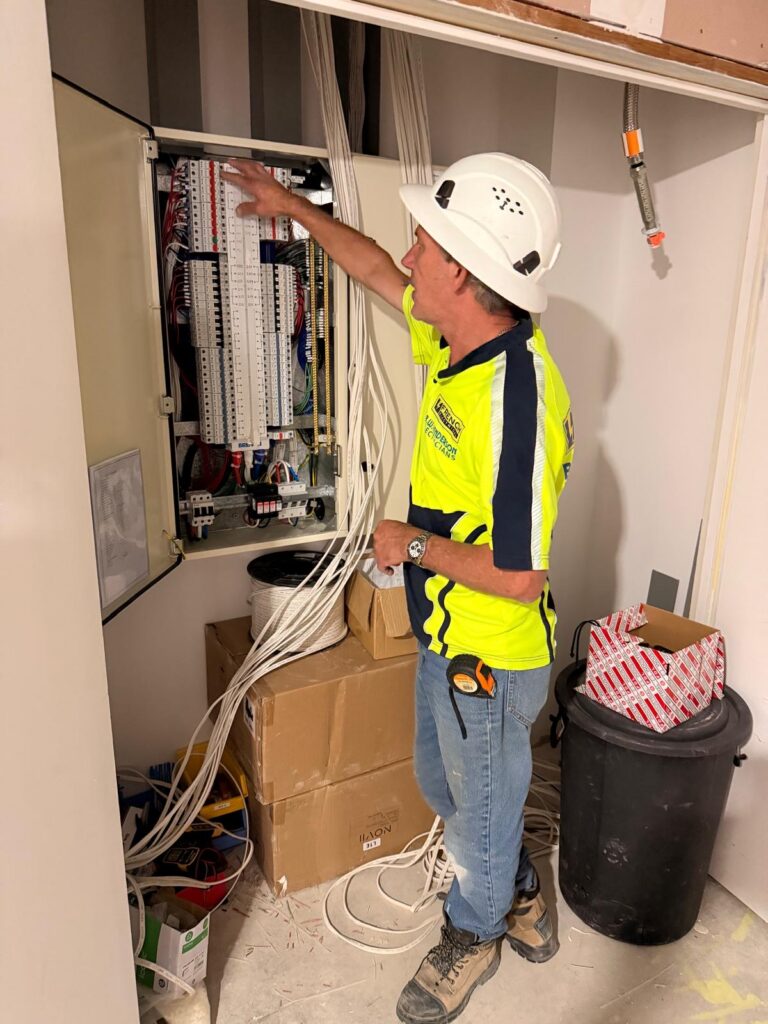
Some jobs are classed as high-risk under the regulations — main supply connections, grid-connected solar and battery systems, hazardous areas and medical locations among them. For these, a CoC and ESC are not enough on their own. A licensed electrical inspector has to check the work independently and issue a Record of Inspection before it is complete.
That third document, not the ESC, is the independent sign-off. If your job counts as high-risk, expect the inspection to be part of both the price and the timeline.
What we hand over when the job is done
Every job we certify gets its paperwork sent through promptly, not months later. You get the CoC describing exactly what was done and the test results behind it, the electrical safety certificate for the connection, and a Record of Inspection where the work is high-risk. We keep copies on file, so if you lose yours or a buyer’s lawyer asks for them years from now, we can send them again.
Electrical safety certificate vs certificate of compliance at a glance
- What it certifies. The CoC certifies the work was done lawfully. The ESC certifies the installation is safe to connect and use.
- Who issues it. Both come from the licensed electrician who did or supervised the work.
- When you get it. Both should reach you within 20 working days of the job being finished.
- High-risk jobs. Both still apply, plus a Record of Inspection from an independent electrical inspector.
- What to do with them. Keep them with your property records. Buyers, insurers and future electricians will ask for them.
When you sell, insure or renovate
Certificates matter most when something happens later. A buyer’s lawyer or building inspector will ask for CoCs covering any significant electrical work, particularly a switchboard upgrade or a rewire. After a fire or electrical fault, your insurer may want proof the work was certified. If you cannot find paperwork for work done on your property, ask the electrician who did it. They are required to keep records and can supply copies.

If you rent or manage the property
Landlords and property managers should keep a CoC and ESC on file for every piece of electrical work done at a rental. They are the evidence that repairs were done by a licensed electrician rather than patched, and they sit naturally alongside your Healthy Homes standards records. When a tenant reports a fault, getting it fixed with certification closes the loop in writing.
Get the right certification in South Auckland
Be wary of electrical work that comes with no paperwork at all. Unlicensed work, or a job that was simply never certified, can cause problems with insurance and at sale time, and leaves no record of whether it was ever tested. If you are unsure whether past work on your property was certified, it is worth having it checked.
BW Henderson issues the correct certification on every job. Our residential electricians work across Papakura, Takanini, Manurewa, Drury and the wider south, and you can see what a callout costs on our pricing page. If you need work done or past work checked, book a job and we will sort the paperwork as part of it. You can check any electrician’s licence on the Electrical Workers Registration Board public register.