

What are the emergency lighting requirements in New Zealand? In short, many commercial, public and multi-unit buildings must have emergency lighting along their escape routes. It must turn on automatically when the power fails, and the owner must keep it tested and maintained. Here is which buildings need it, the standards that apply, and how often it gets tested.
Where emergency lighting requirements come from
The rules start with the New Zealand Building Code. Clause F6 covers visibility in escape routes, so people can find their way out safely if the lights go out. The design of the system usually follows AS/NZS 2293.1, while AS/NZS 2293.2 sets out inspection and maintenance.
In addition, emergency lighting is often a specified system on a building’s compliance schedule. That links it to the annual Building Warrant of Fitness. MBIE’s building.govt.nz explains how compliance schedules work.
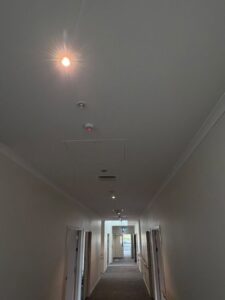
Which buildings need emergency lighting
Whether a building needs emergency lighting depends on its use, size and escape routes. Offices, shops, warehouses, factories, schools, hotels and apartment buildings commonly need it. In contrast, a standalone family home generally does not. Because the answer depends on the specific building, the building’s consent documents and compliance schedule are the best place to check your emergency lighting requirements.
What the system must do
An emergency lighting system has a few core jobs:
- Light escape routes, stairs and exits automatically when normal power fails
- Show the way out with illuminated exit signs
- Run on its own battery or backup supply for the required duration
- Cover changes of direction, stairs and fire equipment along the route
When you fit out or alter a space, the design must keep these routes covered. Our commercial lighting team plans emergency lighting into the layout from the start.
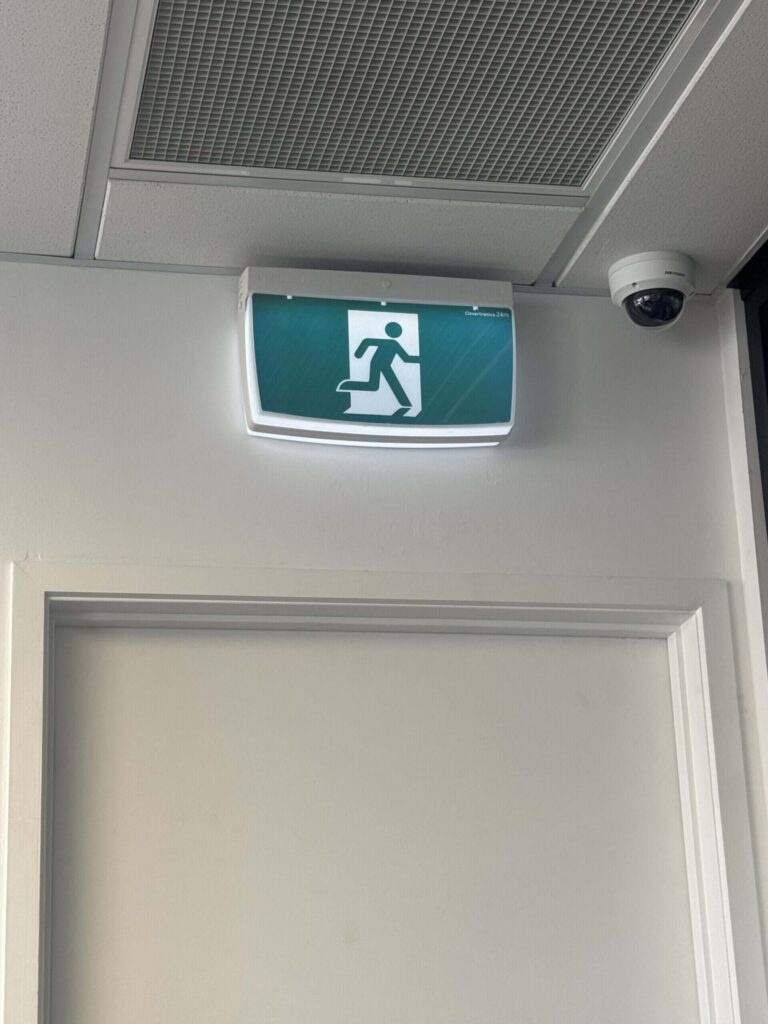
How often emergency lighting is tested
Under AS/NZS 2293.2, emergency lights and exit signs are inspected and discharge-tested every six months. During a discharge test, the electrician cuts the normal supply and checks each fitting stays lit for its full rated time on battery.
Then, any failed fittings or batteries are repaired or replaced, and the results go in the logbook. Those records support the building’s annual compliance. Our emergency lighting testing service handles the six-monthly cycle for you.
Who is responsible for compliance?
The building owner is responsible for keeping specified systems, including emergency lighting, working and documented. Each year, the owner supplies a Building Warrant of Fitness confirming the inspection, maintenance and reporting procedures were followed.
In practice, owners usually rely on an Independent Qualified Person (IQP) and a maintenance contractor. Property managers often coordinate this, which is why our property manager services include compliance work.
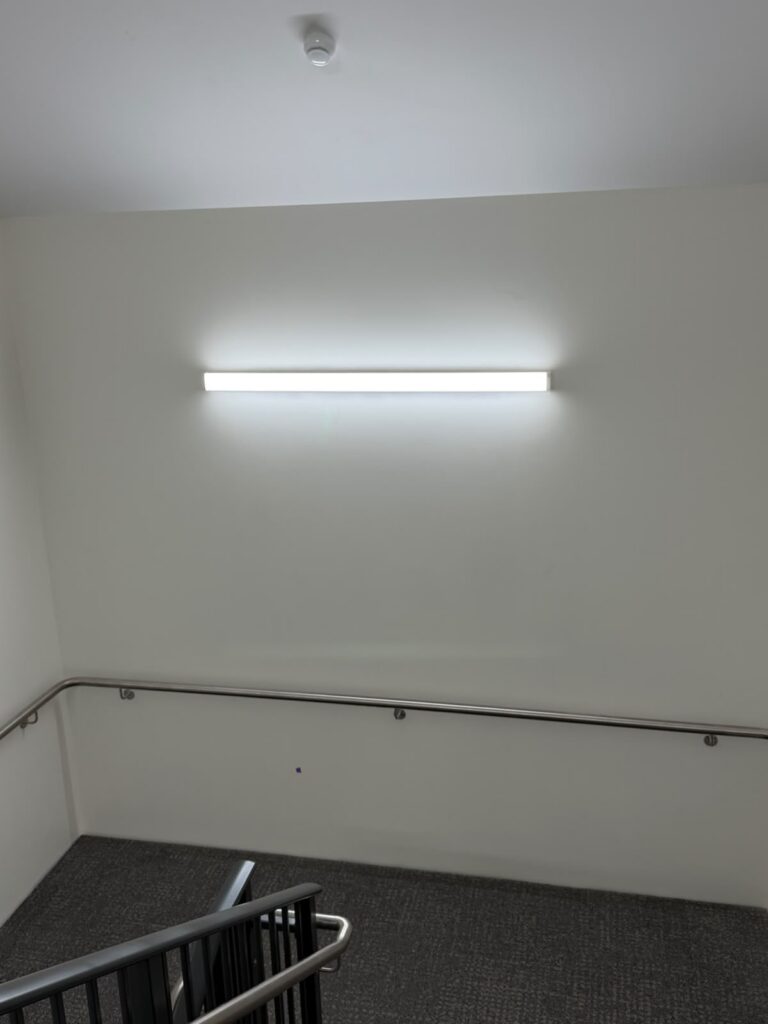
Common failures to watch for
- Flat or aged batteries. Batteries lose capacity over time, so fittings may light up but not last the full test.
- Fittings removed during a fit-out. New partitions can block or bypass the original design.
- Missing or faded exit signs. Signs must stay visible from along the escape route.
- No logbook records. Without records, you cannot show compliance at BWOF time.
- Faults on the supply circuit. These need fault finding, which our breakdown electricians can handle.
Fit-outs and alterations
Changing a building’s layout often affects its emergency lighting. For example, a new office partition can create a corridor with no light, or hide an exit sign. Because emergency lighting is often a specified system, altering it may require building consent and an update to the compliance schedule.
So involve your electrician early in any fit-out, so the new layout still meets the emergency lighting requirements. It is far cheaper to plan emergency lighting in than to add it after the walls go up.
Keeping the system reliable
Reliable emergency lighting comes from a steady routine rather than last-minute fixes. Keep six-monthly tests on schedule, replace batteries before they fail, and keep the logbook up to date.
Many owners bundle emergency lighting with other routine checks, such as test and tag, thermal imaging and planned electrical maintenance. As a result, fewer site visits disrupt the business.
Emergency lighting requirements: FAQs
What are the emergency lighting requirements in NZ?
Many commercial, public and multi-unit buildings need emergency lighting along escape routes, under Building Code clause F6. It must switch on automatically when the power fails and light the way out for the required time. Owners must keep it inspected, tested and recorded, usually as part of the building’s compliance schedule.
How often does emergency lighting need to be tested?
Under AS/NZS 2293.2, emergency lights and exit signs are inspected and discharge-tested every six months. The test checks that each fitting runs on battery for its full rated time. Failed fittings are then repaired, and the results are recorded in the logbook to support the annual Building Warrant of Fitness.
Does my house need emergency lighting?
Generally, no. A standalone family home does not normally need an emergency lighting system. The requirements focus on buildings where people may be unfamiliar with the layout, such as offices, shops, schools and apartment buildings. If you are unsure about a mixed-use property, check its consent documents and compliance schedule.
Who is responsible for emergency lighting compliance?
The building owner. They must keep specified systems, including emergency lighting, working and documented, and supply an annual Building Warrant of Fitness. In practice, owners usually work with an Independent Qualified Person and a maintenance contractor, and property managers often coordinate the work on their behalf.
What is a discharge test?
A discharge test cuts the normal power to the emergency lights so they run on their batteries. The electrician then checks that each fitting stays lit for its full rated duration. Any fitting that dims or fails early usually needs a new battery or replacement before the next test.
Are exit signs part of the system?
Yes. Illuminated exit signs are part of the emergency lighting system, because they show people the way out when normal power fails. They are inspected and tested on the same six-monthly cycle, and they must stay clearly visible from along the escape route after any fit-out.
Do alterations need building consent?
Often, yes. Emergency lighting is usually a specified system on the compliance schedule, so altering it during a fit-out may need building consent and a schedule update. Check with your council or building consultant before work starts, and involve your electrician early in the design.
How long should the lights stay on?
They must stay lit for the duration the design requires, which depends on the standard and the building. Your system’s design documents and compliance schedule state the required time. The six-monthly discharge test then confirms each fitting still meets it as its battery ages.
Emergency lighting testing in South Auckland
BW Henderson has served South Auckland since 1952. Our commercial electricians and industrial electricians install, test and maintain emergency lighting for offices, warehouses, schools and factories across Papakura, Takanini, Manurewa, Wiri and the wider south. Contact us to set up six-monthly testing.